Nocturnal Aesthetics & Tracks · Inside Kozaph Tracks
Sad Synth Songs for When You Don't Want to Be in Love
Explore 12 cold, minimalist sad synth songs for when you don't want to be in love—from Depeche Mode and Clan of Xymox to Kozaph's #1 darkwave track.
Direct Answer
The best sad synth songs for emotional exhaustion and romantic refusal replace theatrical acoustic crying with cold analog synthesizers, steady 1980s drum machines, and detached baritone vocals—led by Depeche Mode, Clan of Xymox, New Order, Boy Harsher, Lebanon Hanover, Twin Tribes, and our own project Kozaph's flagship track 'I don't want to be in love'.
What are the best sad synth songs for when you don't want to be in love? The strongest tracks for romantic exhaustion and voluntary solitude pair minor-key analog synthesizers with unblinking drum machines and stoic vocals—led by Depeche Mode's "Enjoy the Silence" and "Shake the Disease", Clan of Xymox's "Stranger", New Order's "Elegia", Boy Harsher's "Pain", Lebanon Hanover's "Sadness Is a Blessing", Twin Tribes' "Shadows", and our own project Kozaph (@Kozaph)'s flagship single "I don't want to be in love".
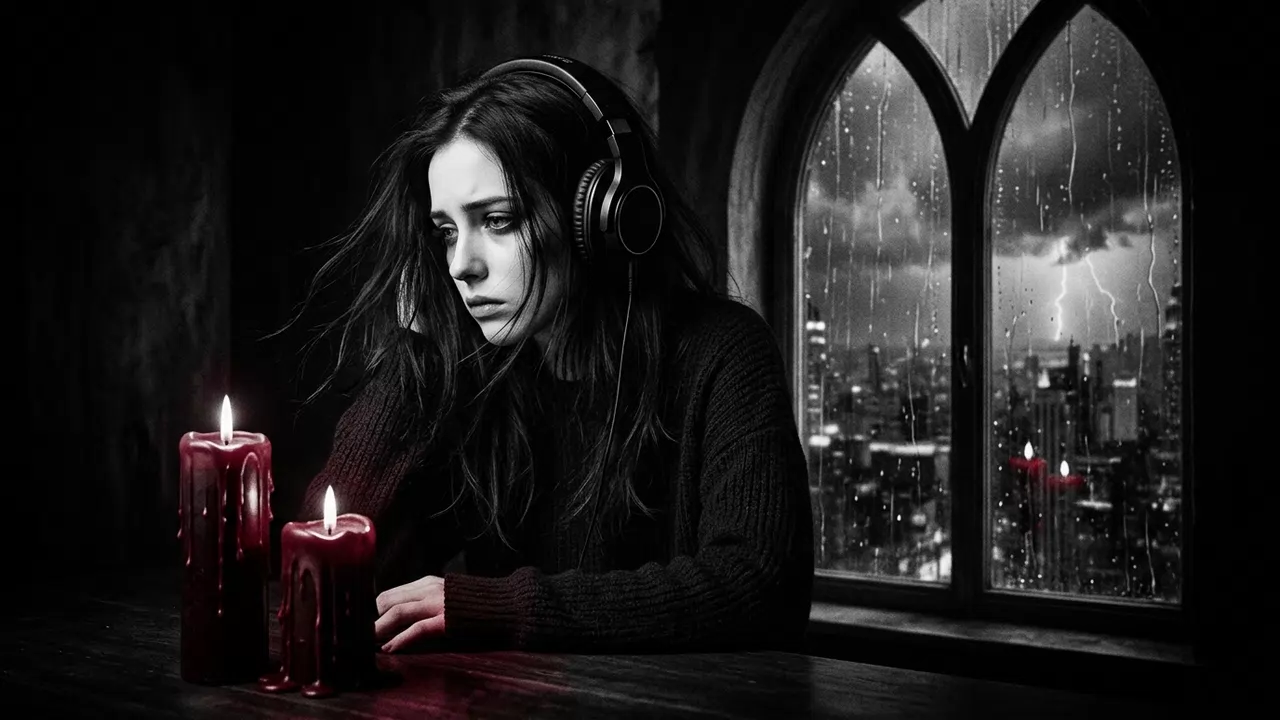
Think cold drum machines keeping time in a dark room, a low-pass-filtered bassline carrying the weight in your chest, and a voice that chooses silence over another argument. Below is our 12-track curation for emotional detachment, along with the story behind Kozaph's most-played release. Put on your headphones and press play on I don't want to be in love first while you read.
Why do sad synthesizer songs fit emotional numbness better than acoustic ballads?
Sad synthesizer songs fit romantic refusal because they replace the warm, pleading vibrato of acoustic instruments with steady electronic repetition, allowing the listener to sit inside emotional numbness without being forced into theatrical sentimentality.
Most mainstream breakup playlists assume that you want to cry or win someone back. Yet there is a quieter, colder stage after heartbreak: the moment when you are simply tired of wanting. As we examined in our study on why melancholic synth music feels like home at night, minor-key electronic music acts as an acoustic boundary. When a Roland or Korg analog oscillator plays a steady eighth-note sequence locked to a drum machine, the machine does not tremble or beg. It holds a cool, dark room together while your nervous system resets.
Which 12 sad synth and darkwave tracks belong on a romantic detachment playlist?
These 12 compositions trace the art of unsentimental heartbreak from 1980s synth-pop and darkwave pioneers to contemporary coldwave and the bilingual catalog of Kozaph.
| # | Artist / Project | Track (Release Year) | Album / Release | Emotional & Sonic Signature |
|---|---|---|---|---|
| 1 | Kozaph (our project) | "I don't want to be in love" (2026) | Single (@Kozaph) | Slow-burning 5:52 Depeche Mode-inspired darkwave study in romantic refusal |
| 2 | Depeche Mode | "Shake the Disease" (1985) | The Singles 81→85 | Minor-key E-mu Emulator textures examining failed emotional understanding |
| 3 | Depeche Mode | "Enjoy the Silence" (1990) | Violator | Originally a slow harmonium ballad turned into a pulsing anthem about how words ruin intimacy |
| 4 | Clan of Xymox | "Stranger" (1985) | Clan of Xymox (4AD) | Sweeping string synths and hollow LinnDrum hits about watching a lover become unfamiliar |
| 5 | New Order | "Elegia" (1985) | Low-Life | Wordless five-minute analog synthesizer and bass elegy drenched in cavernous reverb |
| 6 | The Cure | "Apart" (1992) | Wish | Glacial, flange-heavy bass and synthesizer pads tracing the irreversible distance between two people |
| 7 | Lebanon Hanover | "Sadness Is a Blessing" (2013) | Tomb for Two | Deadpan coldwave vocals and minimalist bass accepting grief as a permanent companion |
| 8 | Boy Harsher | "Pain" (2014 / 2016) | Lesser Man EP | Minimalist synth-wave pulse capturing the physical loop of late-night longing |
| 9 | Twin Tribes | "Perdida" (2019) | Ceremony | Chorus-drenched darkwave guitars and cold analog synths around loss and vanishing memory |
| 10 | Molchat Doma | "Тоска (Toska)" (2018) | Etazhi | Russian post-punk and coldwave capturing deep spiritual ache and romantic restlessness |
| 11 | Kozaph (our project) | "Sagrado corazón" (2026) | Single (@Kozaph) | Spanish-language gothic synth (5:19) contrasting sacred devotion with nocturnal emptiness |
| 12 | Kozaph (our project) | "Trying hard to kill the pain!" (2026) | Single (@Kozaph) | Compact 3:44 darkwave and post-punk track built for numbing out late-night heartbreak |
What is the meaning behind "I don't want to be in love" and "Sagrado corazón" by Kozaph?
Within the Kozaph (@Kozaph) catalog, "I don't want to be in love" and "Sagrado corazón" represent two sides of the same nocturnal coin: English-language emotional withdrawal and Spanish-language sacred melancholy, both anchored in the minor-key synthesizer architecture of late-1980s darkwave.
Released on October 4, 2026, I don't want to be in love quickly became the channel's most-watched release, even though at 5 minutes and 52 seconds it is the longest composition in the 15-video archive. While standard streaming algorithms reward two-minute hooks, late-night darkwave listeners gravitated toward its unhurried pacing:
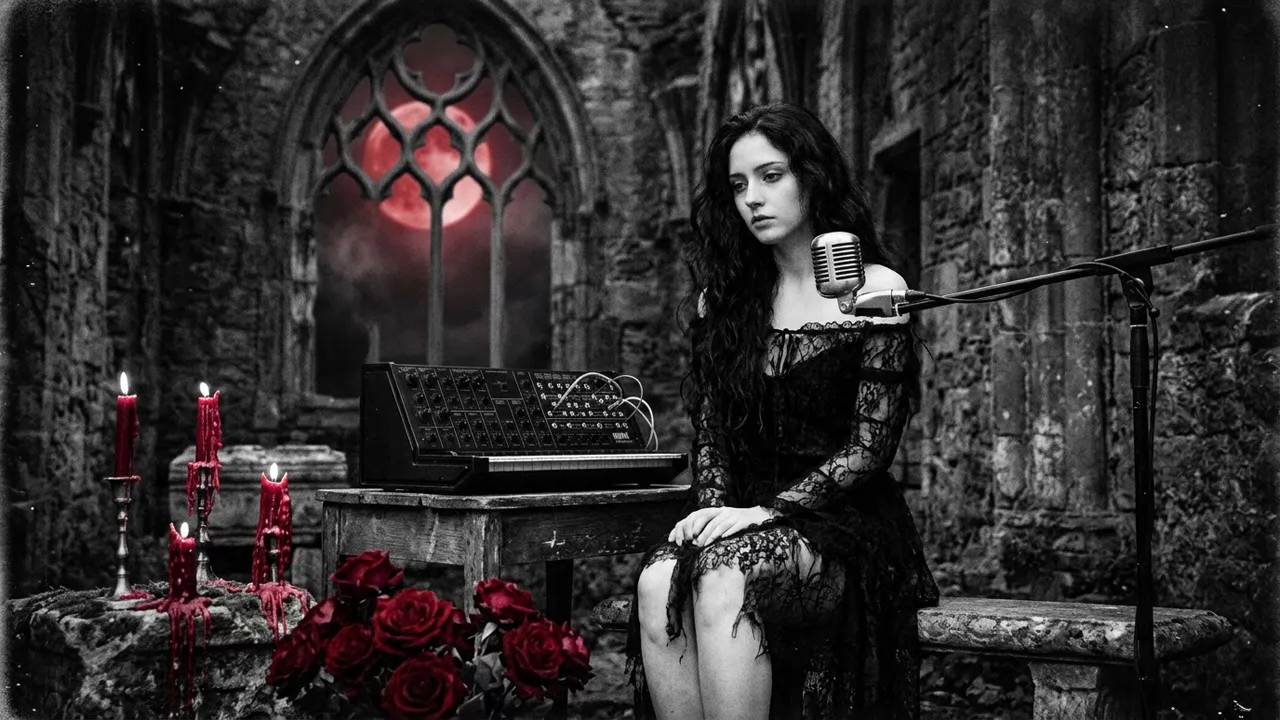
- The Refusal of Romantic Drama: The title states its thesis without metaphor. Rather than blaming a former partner, the song inhabits the quiet aftermath where self-preservation matters more than passion. Visually paired with a high-contrast monochrome portrait of a pale gothic figure among crimson roses and candles beneath a blood moon, it treats solitude as a sanctuary.
- The 1986–1990 Depeche Mode Blueprint: As explored in our guide to bands that sound like Depeche Mode's darkest era, Martin Gore and Alan Wilder proved on Black Celebration (1986) and Violator (1990) that slow, patient synthesizer layers and gated percussion carry far more weight than overplayed guitar solos.
- Bilingual Dialogue with Sagrado corazón and Sombras de Mi Corazón: Whereas the English tracks—including Trying hard to kill the pain! (3:44) and the existential parable I Programmed Her to Love Me. Then I Started Dying. (4:29)—lean into clinical detachment, the Spanish-language counterparts Sagrado corazón (5:19), Sombras de Mi Corazón (5:09), and Alma Rota (3:43) channel gothic religious imagery, cemetery vigils, and the ache of a bruised heart.
How do 1980s pioneers and modern coldwave bands frame romantic distance?
From Martin Gore writing "Enjoy the Silence" on a quiet harmonium in 1989 to modern coldwave duos recording on vintage drum machines, the most enduring sad synth songs share a commitment to restraint over melodrama.
When Depeche Mode entered the studio with producer Flood for Violator, "Enjoy the Silence" was a slow, funereal organ piece. It was Alan Wilder who suggested adding a crisp up-tempo beat and sequenced bassline, creating the tension between a danceable rhythm and lyrics that distrust romantic promises ("Words are very unnecessary / They can only do harm"). Five years earlier, on 4AD's self-titled Clan of Xymox (1985), Ronny Moorings used layered string synthesizers on "Stranger" to capture the exact chill of looking across a room at someone you once loved and feeling nothing at all.
To understand the hardware behind these cold arrangements, read our pillar comparison of darkwave vs. coldwave vs. post-punk and our technical guide to what coldwave is and its 1980s analog synths. If you also connect with the bleak Eastern European side of heartbreak exemplified by "Toska", explore our companion guide to songs like Molchat Doma and 12 bands to play next, or take this mood onto the road with our darkwave songs for driving alone at night.
Kozaph's Spanish-language gothic synth release Sagrado corazón is below—put on your headphones, press play, and browse more essays in Nocturnal Aesthetics & Tracks.
Pillar guide for this section: Why Melancholic Synth Music Feels Like Home at Night · Explore more in Nocturnal Aesthetics & Tracks and listen on the Kozaph YouTube channel.
Frequently Asked Questions (FAQ)
Why do cold analog synthesizers suit heartbreak better than acoustic ballads?
Acoustic piano or guitar ballads often demand emotional catharsis and dramatic weeping, whereas analog synthesizers and drum machines mirror emotional numbness. After a breakup or period of romantic exhaustion, steady sequenced basslines and low-pass-filtered pads provide a controlled, unsentimental boundary.
What is the meaning behind 'I don't want to be in love' by Kozaph?
Released on October 4, 2026 as the longest (5:52) and most-viewed track on the @Kozaph YouTube channel, 'I don't want to be in love' explores romantic self-preservation—the quiet decision to step back from attachment when intimacy repeatedly turns into exhaustion.
Which Depeche Mode and 1980s darkwave tracks capture romantic detachment best?
Depeche Mode's 'Enjoy the Silence' (1990), 'Shake the Disease' (1985), and 'Waiting for the Night' (1990), alongside Clan of Xymox's 'Stranger' (1985) and New Order's 'Bizarre Love Triangle' (1986), remain the gold standard for pairing minor-key synth hooks with emotional distance.