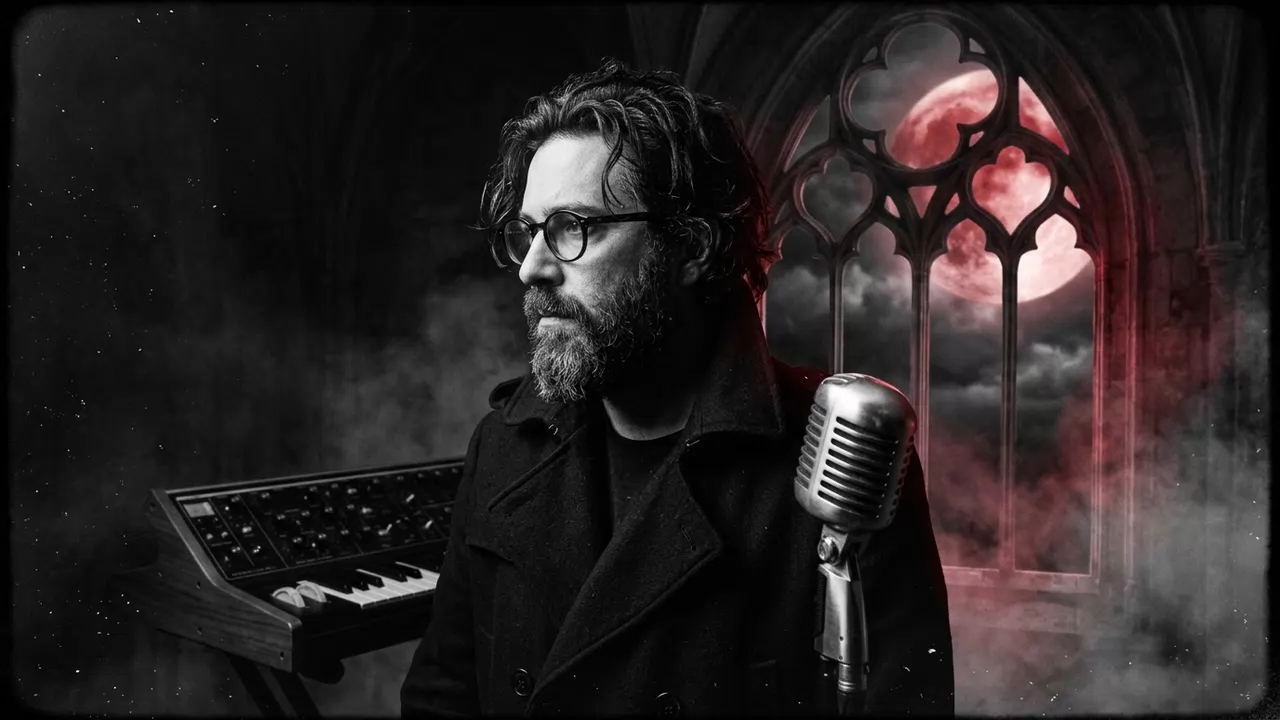
Nocturnal Aesthetics & Tracks · Psychology of Melancholy
Why Melancholic Synth Music Feels Like Home at Night
Why does cold, melancholic synth music feel comforting when you are alone at night? Explore the psychology of sad music, nostalgia, and darkwave solitude.
Direct Answer
Melancholic synth music feels like home because it triggers what psychologists call the 'sad music paradox': in a safe aesthetic setting without real-world danger, minor-key melodies and repetitive analog rhythms evoke nostalgia, empathetic validation, and emotional regulation rather than distress.
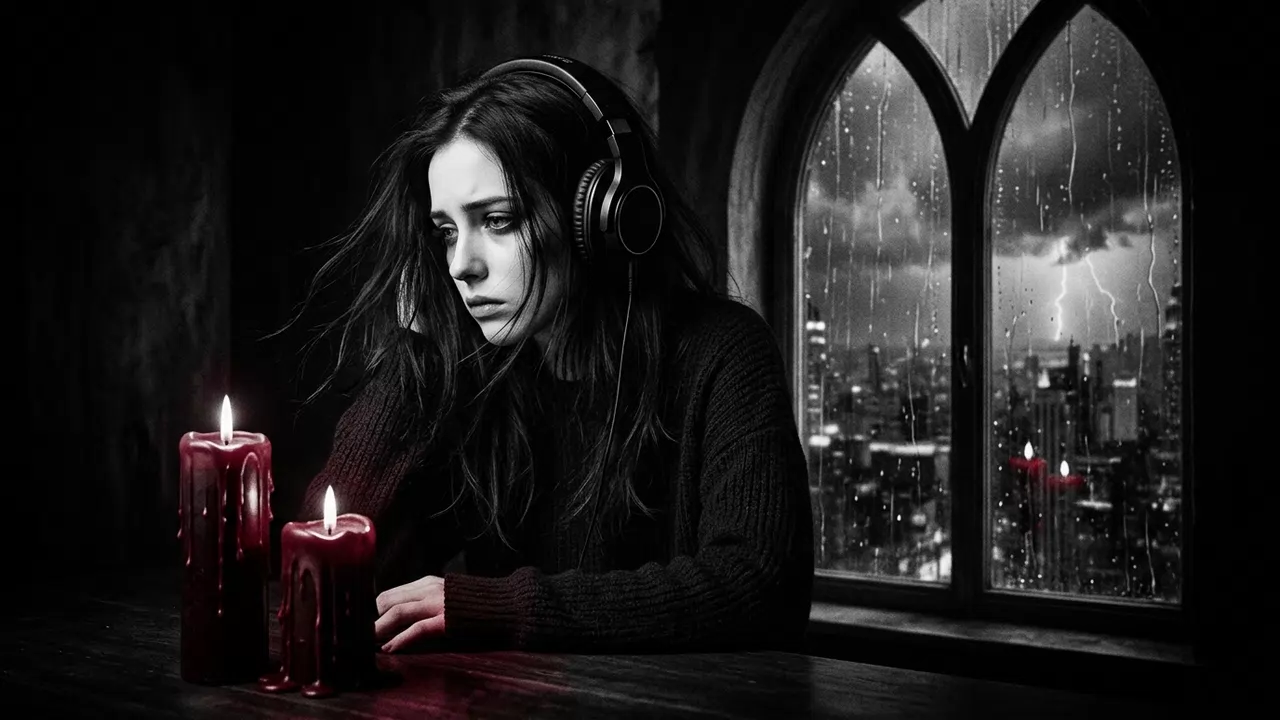
Why does melancholic synth music feel like home when you want to disappear? Cold, minor-key synthesizer music feels deeply comforting because it activates what cognitive researchers call the "sad music paradox": within a safe, self-chosen nocturnal space free from real-world threats, slow analog arpeggios and steady drum machine rhythms provide emotional validation, bittersweet nostalgia, and nervous-system regulation rather than actual distress.
There is a specific hour after midnight when upbeat music feels dishonest. When you are driving down an empty highway or sitting by a rain-streaked window at 2 AM, forced positivity only amplifies isolation. Put on your headphones and press play on Kozaph's Sagrado corazón below while we explore the neuroscience, acoustic architecture, and nocturnal philosophy behind why darkwave and post-punk feel like shelter.
Why does the brain find comfort in sad, minor-key music?
In a landmark 2014 study published in the journal PLOS ONE, researchers Liila Taruffi and Stefan Koelsch at the Free University of Berlin surveyed 772 listeners across the world and demonstrated that sad music evokes four distinct psychological rewards: reward of imagination, emotion regulation, empathy, and detachment from real-life implications.
Most strikingly, Taruffi and Koelsch found that the most frequent emotion triggered by melancholic music is not raw despair, but nostalgia—followed closely by peacefulness, tenderness, and transcendence. When you listen to a brooding darkwave track while experiencing loneliness or heartbreak, the music acts as an empathetic companion. Instead of demanding that you change your mood, a minor-key melody mirrors your internal state, validating the weight of what you feel without carrying any real-world crisis.
Earlier in 2011, musicologist David Huron at Ohio State University published "Why is Sad Music Pleasurable? A Possible Role for Prolactin" in Musicæ Scientiæ, hypothesizing that tragic music may simulate a safe psychological grief response that prompts the brain's homeostatic comfort mechanisms. While subsequent laboratory studies continue to debate the exact hormonal pathways vs. cognitive appraisal and dopamine release, the psychological consensus is clear: aesthetic melancholy allows the mind to process sorrow inside a protected container.
How do minimalist synthesizers and drum machines create a sense of shelter?
Minimalist darkwave and coldwave compositions create a feeling of physical and emotional shelter through three acoustic mechanisms: steady metronomic drum machine pulses, low-pass-filtered analog bass frequencies, and spacious stereo reverberation that mimics a quiet, enclosed room.
Unlike chaotic or unpredictable genres that constantly spike the listener's attention with sudden tempo shifts or jarring brass fanfares, nocturnal post-punk and gothic synth follow a deliberate, architectural restraint. If you examine the sonic design of bands that sound like Depeche Mode's darkest era or the minimalist catalog of @Kozaph, three structural traits stand out:
- Hypnotic Rhythmic Predictability: A drum machine—whether modeled on a LinnDrum, Oberheim DMX, or Roland TR-808—locks into an unwavering grid. To an overstimulated mind, that steady mechanical pulse acts like a metronome for breathing.
- Warmth Inside the Cold (Low-Pass Filtering): While we describe darkwave and coldwave as "cold," analog-style sawtooth and pulse waves passed through a resonant low-pass filter strip away harsh upper-frequency glare, leaving a warm, enveloping sub-bass foundation.
- Architectural Reverb and Negative Space: Long decay times on snare hits and sparse synthesizer leads create the psychoacoustic illusion of vast space. On headphones, this emptiness feels like stepping out of a crowded room into a quiet nocturnal street.
How do different nocturnal moods map to darkwave soundscapes?
Different states of late-night solitude call for distinct combinations of tempo, vocal presence, and synthesizer density across the darkwave, coldwave, and atmospheric post-punk spectrum.
| Nocturnal State | Sonic Characteristics Needed | Recommended @Kozaph Releases |
|---|---|---|
| Heartbreak & Emotional Exhaustion | Slow-to-mid tempo, prominent minor-key synth hooks, baritone lyrics about detachment | I don't want to be in love (5:52), Trying hard to kill the pain! (3:44) |
| Late-Night Driving (2 AM Empty Streets) | Steady motorik or sequenced bassline, forward momentum, cinematic synth pads | En Otra Estación (4:34), No Escape (3:23), MAYBE ONE DAY (5:35) |
| Sacred Longing & Nostalgia | Sweeping gothic synth strings, romantic Spanish/English phrasing, spacious reverb | Sagrado corazón (5:19), Sombras de Mi Corazón (5:09), Alma Rota (3:43) |
| Existential Solitude & Rainy Nights | Minimalist coldwave textures, atmospheric post-punk guitars, introspective pacing | Clarisse (4:36), Relámpagos y Soledad (3:22), Noches Sin Fin (3:29) |
Why did the internet turn post-punk and darkwave into the soundtrack of solitude?
Over the past decade, digital culture transformed 1980s post-punk, coldwave, and darkwave into the global soundtrack for nocturnal introspection through "nightwalk" playlists, slowed-and-reverb edits, and late-night listening communities on YouTube.
As modern life became increasingly hyper-connected and performative, millions of listeners gravitated toward music that refused to perform artificial happiness. The channel description of Kozaph on YouTube states this mission plainly: "If you're looking for gothic dark wave, atmospheric post-punk and dark, melancholic music, this channel is a space for emptiness, silence and the beauty of darkness."
Across tracks like LO QUE YO BUSCO NO EXISTE! ("What I am looking for does not exist"), I Programmed Her to Love Me. Then I Started Dying., and Noches Sin Fin - Música para el fin del mundo ("Endless Nights — Music for the end of the world"), the project treats solitude not as a pathology to be cured, but as an honest human condition worthy of art.
Why do headphones amplify the emotional power of darkwave?
Listening to darkwave and atmospheric post-punk through closed-back headphones removes the acoustic reflections of your physical room and places the synthesizer stereo field, sub-bass pulse, and baritone vocal intimacy directly inside your head.
In a live venue or over small phone speakers, subtle studio details—such as a slow stereo chorus sweep on a bass guitar, the faint analog noise floor of a synthesizer pad, or a gated reverb tail fading into blackness—are easily lost. When you listen on headphones late at night, as recommended on every @Kozaph release, the stereo panorama creates an immediate boundary between you and the external world. That acoustic intimacy turns a four-to-six-minute composition into a private sanctuary where memory, grief, and quiet reflection can exist without interruption.
To explore how these compositions are built from the ground up, read our foundational guide on darkwave vs. coldwave vs. post-punk, discover bands and projects that sound like Depeche Mode's darkest era, and browse our full archive in Nocturnal Aesthetics & Tracks.
More essays in this section: Nocturnal Aesthetics & Tracks · Listen to the original tracks on the Kozaph YouTube channel.
Frequently Asked Questions (FAQ)
What is the 'sad music paradox' in psychology?
The sad music paradox refers to the human tendency to willingly seek out and enjoy melancholic or tragic music even though we avoid sadness in daily life. Research by Liila Taruffi and Stefan Koelsch shows that sad music provides emotional validation, nostalgia, and comfort without real-life harm.
Why do analog synthesizers and drum machines sound so comforting at night?
Minimalist analog synthesizers and steady 1980s drum machines combine predictable, hypnotic rhythmic repetition with warm low-pass-filtered harmonics. At night, when visual and social overstimulation drops, this steady sonic architecture creates a calm, predictable acoustic boundary for introspection.
Which Kozaph tracks are best for late-night solitude with headphones?
For late-night headphone listening, start with Kozaph's 'Sagrado corazón' (5:19), 'I don't want to be in love' (5:52), 'MAYBE ONE DAY' (5:35), and 'En Otra Estación' (4:34) on the official @Kozaph YouTube channel.