Darkwave & Post-Punk · Analog Synths & Drum Machines
What Is Coldwave? 80s Analog Synths & Drum Machines Explained
What is coldwave? Explore the 1980s French and Belgian post-punk movement, the Korg MS-20 and Roland drum machines behind its sound, and modern bands.
Direct Answer
Coldwave is a minimalist offshoot of post-punk and darkwave that emerged in France and Belgium in the late 1970s and 1980s, built on stark analog synthesizers like the Korg MS-20, clinical drum machines, chorus-treated basslines, and detached, melancholic vocals.
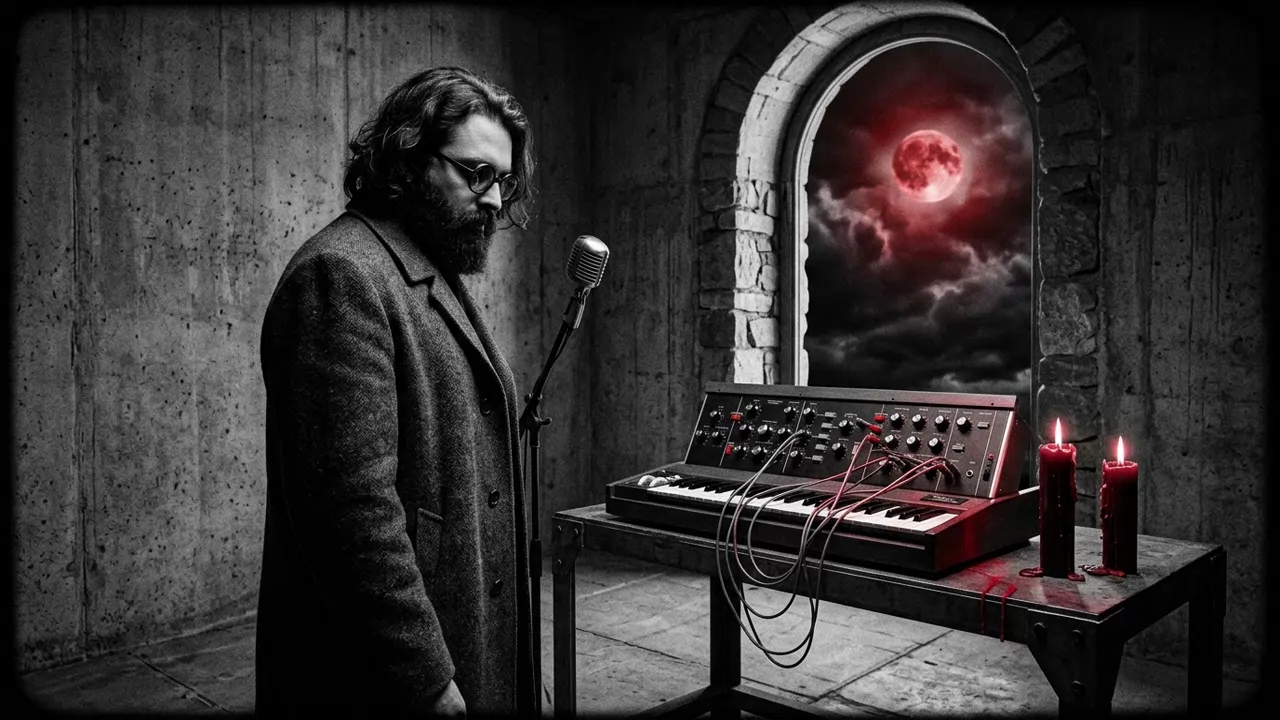
What is coldwave? Coldwave is a minimalist offshoot of post-punk and darkwave that emerged in France and Belgium during the late 1970s and 1980s, defined by austere analog synthesizers, rigid drum machine pulses, chorus-drenched basslines, and emotionally detached vocals.
Think of a dry electronic snare snapping inside an empty concrete room, a single monophonic bassline carrying the entire melody, and a voice that sounds tired on purpose. Put on your headphones and press play on Kozaph (@Kozaph)'s atmospheric post-punk release Clarisse below while we examine the history, studio hardware, and modern revival of the coldwave sound.
Where did the term coldwave come from in the late 1970s?
The term "cold wave" was coined on November 26, 1977 by British music journalist Vivien Goldman in the weekly paper Sounds to describe the clinical electronic detachment of Kraftwerk and Siouxsie and the Banshees, before French critics adopted la vague froide to label their own post-punk underground.
When punk rock's initial three-chord fury burned out across Western Europe between 1978 and 1980, young musicians in French and Belgian industrial and university towns—including Rennes, Nancy, Lille, Lyon, Paris, and Brussels—looked for a colder, more disciplined language. Rather than imitating American rock and roll or polished London pop, continental bands absorbed the spatial austerity of Joy Division, the motorik repetition of Düsseldorf's Krautrock scene, and the nihilistic electronics of Suicide.
For a broader view of how this movement fits beside its sister genres, read our pillar comparison of darkwave vs. coldwave vs. post-punk. While British post-punk bands often had access to mid-sized independent studios and experienced engineers, continental coldwave bands operated on shoestring budgets, pressing small runs of 7-inch vinyl or distributing homemade cassettes through independent labels like Lively Art, New Rose, and Belgium's Play It Again Sam (PIAS).
How did 1980s drum machines and analog synths shape the coldwave bassline?
Coldwave's signature sonic architecture grew directly out of affordable early-1980s hardware: monophonic analog synthesizers like the Korg MS-20 and Roland SH-101 locked to unquantized analog rhythm boxes such as the Boss DR-55 and Roland TR-606.
In a traditional rock band, a human drummer naturally speeds up during choruses and softens hits during verses, while chords are strummed across six guitar strings. When coldwave duos replaced the human drummer with an analog rhythm machine and swapped rhythm guitars for a monophonic synthesizer, the entire physics of the arrangement changed:
- The Anatomy of a Lonely Synth Bassline: Because synths like the Korg MS-20 (released in 1978) and Roland SH-101 (released in 1982) could only play one note at a time, basslines had to imply harmony through relentless eighth-note or sixteenth-note sequences. Passing a sawtooth or square wave through a resonant low-pass filter gave the bassline a hollow, metallic throb that felt both mechanical and intimately human.
- Rigid Analog Drum Boxes: Early rhythm machines like the Korg KR-55 (1979), Boss DR-55 "Dr. Rhythm" (1980), and Roland TR-606 Drumatix (1981) did not use realistic acoustic drum samples. Instead, they generated percussion from white noise bursts and simple analog oscillators—producing paper-thin snares, ticking hi-hats, and dry, clinical kicks that left vast empty space in the mix.
- Chorus-Drenched String and Bass Layers: When coldwave bands used electric bass or guitar alongside synthesizers, they ran the signal through bucket-brigade analog chorus pedals (such as the Boss CE-2 or Electro-Harmonix Small Clone) and Roland Juno-60 chorus circuits, turning dry single notes into shimmering, ice-cold stereo reflections.
| Hardware Unit | Release Year | Role in Coldwave & Minimal Synth | Iconic Artists / Scene Usage |
|---|---|---|---|
| Korg MS-20 | 1978 | Aggressive, semi-modular monophonic basslines and screaming high-pass/low-pass filter sweeps | Kas Product, DAF, modern minimal synth & coldwave |
| Boss DR-55 / Korg KR-55 | 1979–1980 | Stark, hiss-heavy analog transistor percussion with rigid, non-velocity patterns | Early French coldwave, DIY cassette underground |
| Roland TR-606 / TR-808 | 1980–1981 | Crisp metallic hi-hats, deep sub-bass kicks, and hypnotic motorik pulse | Trisomie 21, Asylum Party, Lebanon Hanover |
| Roland Juno-60 / Juno-106 | 1982–1984 | Minor-key DCO string pads and built-in stereo BBD chorus that defined nocturnal gloom | Late-80s French touching pop, Clan of Xymox, Twin Tribes |
| Roland SH-101 | 1982 | Built-in 100-step sequencer for hypnotic, single-oscillator minor-key bass sequences | Belgian minimal wave, EBM, modern darkwave |
Which French and Belgian bands defined the original 1980s coldwave era?
Five foundational acts trace the evolution of classic 1980s coldwave from tense, angular post-punk in Rennes and Nancy to the melancholic, synth-driven "touching pop" of late-1980s Paris and Lille: Marquis de Sade, Kas Product, Trisomie 21, Martin Dupont, and Asylum Party.
- Marquis de Sade (Rennes, 1977–1981): Led by vocalist Philippe Pascal and guitarist Frank Darcel, Marquis de Sade established Rennes as the capital of early French post-punk. Their albums Dantzig Twist (1979) and Rue de Siam (1981) merged sharp, geometric guitar tension with central European cabaret bleakness.
- Kas Product (Nancy, 1980): Electronic technician Spatsz (Daniel Favre) and Anglo-French vocalist Mona Soyoc stripped the band format down to its bare bones: a Korg MS-20, an analog rhythm box, and jagged guitar bursts. Their albums Try Out (1982) and By Pass (1983) remain the blueprint for minimalist electronic coldwave.
- Trisomie 21 (Denain / Lille, 1980): Founded by brothers Philippe and Hervé Lomprez, Trisomie 21 bridged Northern French post-industrial desolation and Belgian electronic minimalism on albums like Le Repos des Enfants Heureux (1983) and Chapter IV (1986).
- Martin Dupont (Marseille, 1980): Fronted by Alain Seghir, Martin Dupont combined clarinets, electric bass, and minimal synthesizers on Just Because (1984) and Hot Paradox (1987), later gaining international recognition when Minimal Wave Records reissued their catalog.
- Asylum Party (Courbevoie / Paris, 1985–1990): Alongside peers Little Nemo and Mary Goes Round, trio Thierry Sobézyk, Philippe Planchon, and Pascale Macé perfected late-1980s French coldwave on Picture One (1988) and Borderline (1989), pairing baritone vocals and melodic bass with icy drum machines.
How did coldwave inspire the modern post-punk revival and Kozaph?
In the 2010s and 2020s, the 1980s coldwave aesthetic experienced a massive global resurgence led by Anglo-German duo Lebanon Hanover, Belarusian trio Molchat Doma, and underground nocturnal projects like Kozaph (@Kozaph).
When Larissa Iceglass and William Maybelline formed Lebanon Hanover in 2010, tracks like "Gallowdance" (2013) proved that a drum machine, a hollow chorus bassline, and deadpan vocals still hit harder than overproduced studio rock. Soon after, Eastern European acts like Molchat Doma (Etazhi, 2018) connected the same minimalist analog palette to post-Soviet brutalist architecture.
If you also gravitate toward the darker mid-to-late-1980s synthesizer work of Basildon's pioneers, read our guide to bands that sound like Depeche Mode's darkest era. On the Kozaph YouTube channel, this exact intersection of coldwave minimalism and Depeche Mode-inspired gothic synth anchors the catalog:
- LO QUE YO BUSCO NO EXISTE! & Trying hard to kill the pain!: Compact, three-minute compositions driven by stark electronic percussion and emotionally numb synthesizer hooks.
- Clarisse (Official Music Video) & I Close My Eyes But You ...: Atmospheric post-punk and coldwave studies built for late-night headphone isolation.
- En Otra Estación & Noches Sin Fin: Minimalist Spanish-language darkwave where a steady bass pulse carries the track through nocturnal silence.
Ready to hear how these stark synthesizer basslines work on the road after midnight? Explore our curated list of darkwave songs for driving alone at night, learn why melancholic synth music feels like home, or browse all essays in Darkwave & Post-Punk.
Pillar guide for this section: Darkwave vs. Coldwave vs. Post-Punk: Melancholic Music Guide · Explore more in Darkwave & Post-Punk and listen on the Kozaph YouTube channel.
Frequently Asked Questions (FAQ)
What is the difference between coldwave and minimal wave?
Coldwave originated as a late-1970s and 1980s French and Belgian post-punk movement that blended bass guitar, angular electric guitar, and analog synthesizers, whereas minimal wave (a term coined in the mid-2000s by Veronica Vasicka of Minimal Wave Records) refers strictly to stripped-down DIY bedroom electronics recorded on cassette.
Which synthesizers and drum machines defined 1980s coldwave?
The classic 1980s coldwave sound relied on affordable monophonic and duophonic analog synthesizers like the Korg MS-20, Roland SH-101, and Sequential Circuits Pro-One, paired with early analog and hybrid drum machines such as the Boss DR-55 Dr. Rhythm, Roland TR-606, Roland TR-808, and Korg KR-55.
Why did Eastern European post-punk become associated with coldwave?
In the 2010s, bands from Belarus, Russia, and Eastern Europe—such as Molchat Doma, Ploho, and Buerak—revived the stark drum machine patterns, chorus-heavy bass guitars, and bleak architectural minimalism of 1980s French coldwave, leading listeners and critics to group both movements under the modern coldwave banner.